 Compoundv2
: Repay or Withdraw
Updated:Compound V2 is an Ethereum lending protocol whose executed deprecation proposal paused new supplies and borrows. Repayment reduces existing debt; withdrawal redeems cTokens for underlying assets when market cash and account liquidity checks permit.
- Wind-down decision
- Governance proposal 512 records execution on December 8, 2025. Its V2 changes pause mints and borrows and set reserve factors to 100% of newly accrued borrower interest.
- Repayment asset
- The borrowed market's underlying asset, with accrued interest included in the debt balance.
- Withdrawal asset
- The redeemed cToken market's underlying asset. Available cash and any applicable collateral check limit redemption.
Debt Reduction and Asset Redemption
Repayment returns assets to the borrowed market and reduces the borrower's debt. Redemption removes a supplied claim and returns that market's underlying asset to the cToken holder. Repaying debt does not automatically redeem collateral.
A withdrawal can fail when it would leave insufficient collateral for remaining debt. Reducing debt can change that result, although repayment does not guarantee cash in a different asset market.
The V2 Comptroller implementation has a deprecation branch that permits liquidation without an account shortfall. The borrowed market must have a zero collateral factor, paused borrowing and a 100% reserve factor. The market's actual settings determine whether this exception applies.
Repayment Assets and Permissions
The V2 contracts accrue interest before applying repayment, so an earlier displayed debt can become stale. ERC-20 repayments require the payer to hold the borrowed asset and authorize its transfer to the correct cToken contract. An allowance approval supplies permission; it does not itself reduce debt.
CEther receives native ETH through a payable repayment call, without an ERC-20 allowance. The
repayBorrow
method targets the payer's own debt. For payment on another address's debt,
repayBorrowBehalf
identifies the borrower separately. The market credits the underlying amount that it actually receives. Any remaining debt stays subject to the market's borrowing rate.
Redemption Units and Limits
The
redeem
method specifies how many cTokens to exchange. The
redeemUnderlying
method specifies how much underlying asset to receive. Both use the market's exchange rate, so confusing the units changes the requested amount.
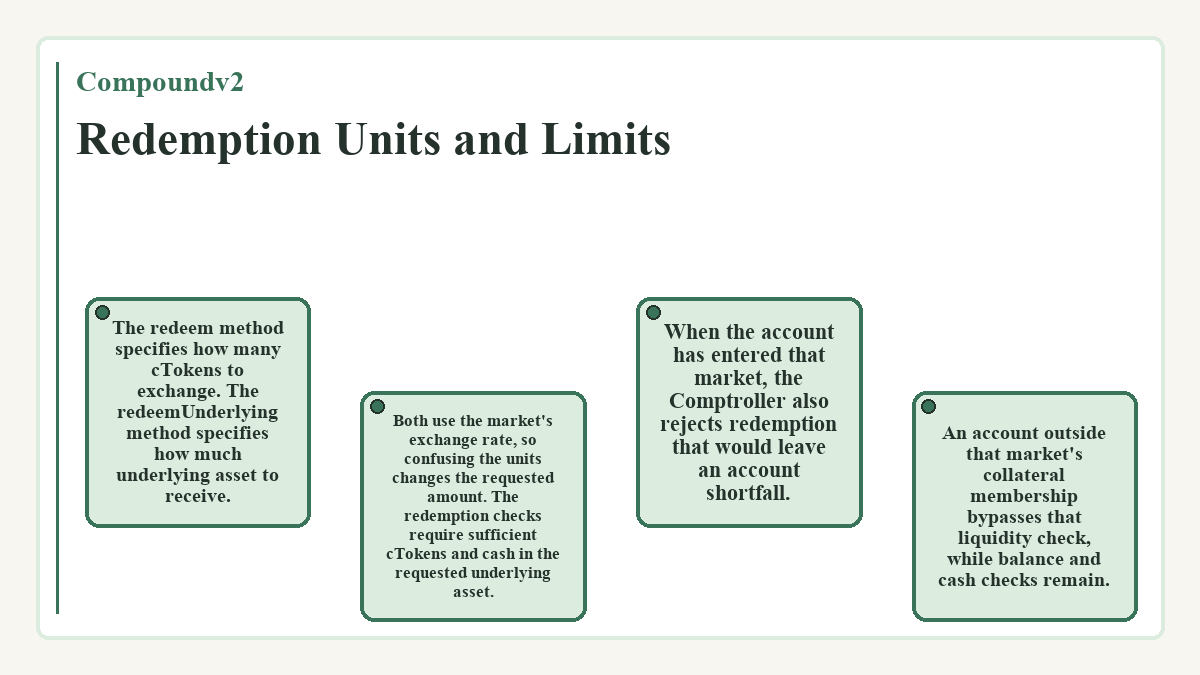
The redemption checks require sufficient cTokens and cash in the requested underlying asset. When the account has entered that market, the Comptroller also rejects redemption that would leave an account shortfall. An account outside that market's collateral membership bypasses that liquidity check, while balance and cash checks remain.
Transaction Evidence
The
RepayBorrow
event records the payer, borrower, actual repayment and remaining debt in that market when repayment executes successfully. The
Redeem
event records the underlying amount returned and cTokens redeemed in a successful redemption. A wallet connection, allowance approval or transaction submission alone does not establish either completed balance change.
First Transaction Checklist
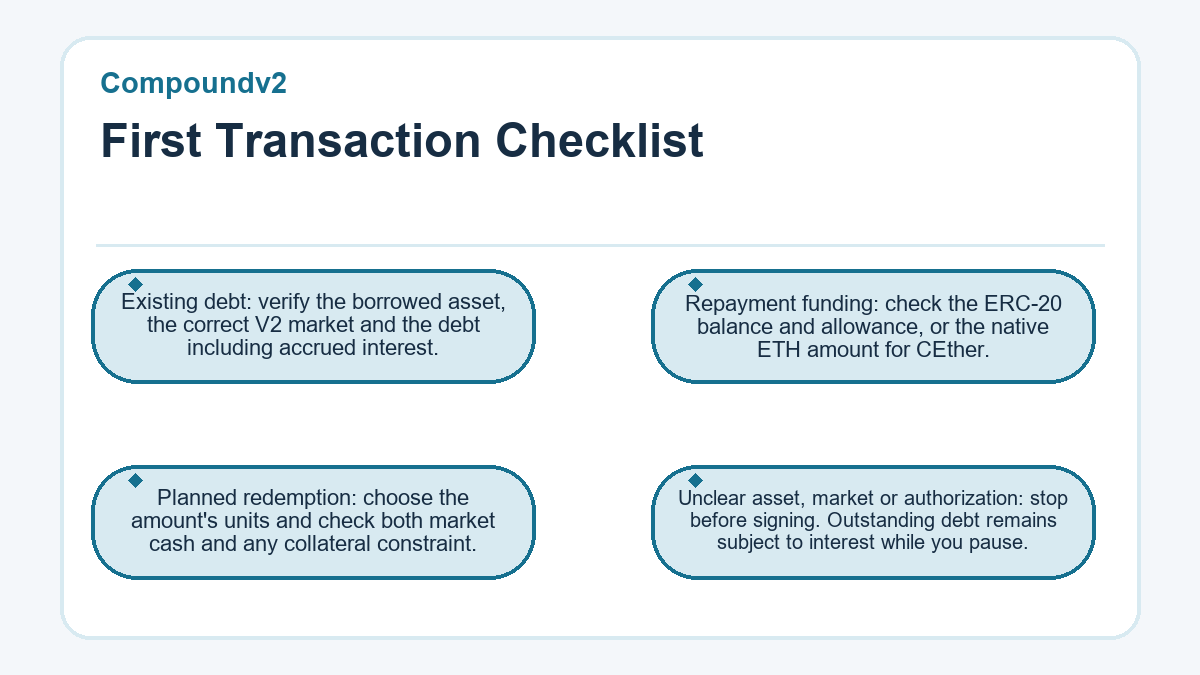
- Existing debt: verify the borrowed asset, the correct V2 market and the debt including accrued interest.
- Repayment funding: check the ERC-20 balance and allowance, or the native ETH amount for CEther.
- Planned redemption: choose the amount's units and check both market cash and any collateral constraint.
- Unclear asset, market or authorization: stop before signing. Outstanding debt remains subject to interest while you pause.
Interface Changes and V3 Positions
AranaDigital's Compound Front-end Migration announcement of June 24, 2026 described a website change that left contracts and positions unchanged. Its June 29, 2026 update confirmed the new interface was live. The website change required no movement of funds and did not convert V2 positions into V3 positions. Compound also permits third-party interfaces and direct interaction with its smart contracts.
Questions people ask about Compoundv2
Does exitMarket Withdraw the Supplied Assets?
No. The V2 Comptroller's exitMarket method changes collateral membership without redeeming cTokens or transferring underlying assets. It rejects an exit if debt remains in that market or removal would leave an account shortfall.